Words: 1099 | Estimated Reading Time: 6 minutes | Views: 109
LDP Proposes Permit System: From Declaration to Approval
On September 24, 2026, the LDP's Foreign Nationals Policy Headquarters submitted a proposal to the Japanese government, seeking to revise the Act on Investigation of Important Land during the extraordinary Diet session opening October 5. The core change upgrades the current "post-acquisition reporting" system to a "pre-acquisition permit" system.
Under the proposal, land ownership transfers within 1km of Self-Defense Force facilities would require government screening. New areas added to the regulated zone include the Imperial Palace, the National Diet Building, the Prime Minister's Official Residence, and uninhabited border islands. Applications from foreign governments, foreign military personnel, and their affiliates would be denied in principle. Transactions without permits would be invalidated, with penalties added.
The proposal also addresses urban apartment price increases, noting that speculative purchases by foreign capital have caused public concern, and suggests considering tax measures or time-limited restrictions to curb speculation.
The Scale of Foreign Capital: A 1 Trillion Yen Market
Foreign investment in Japanese real estate continues to grow. According to Mitsubishi UFJ Trust Bank, 20% to 40% of new condominiums in Tokyo are sold to foreign nationals. In the first half of 2025, overseas investors purchased over 1 trillion yen worth of Japanese real estate, a record high. Foreign investors now account for 27% of total real estate transactions in Japan, up from 21% five years ago.
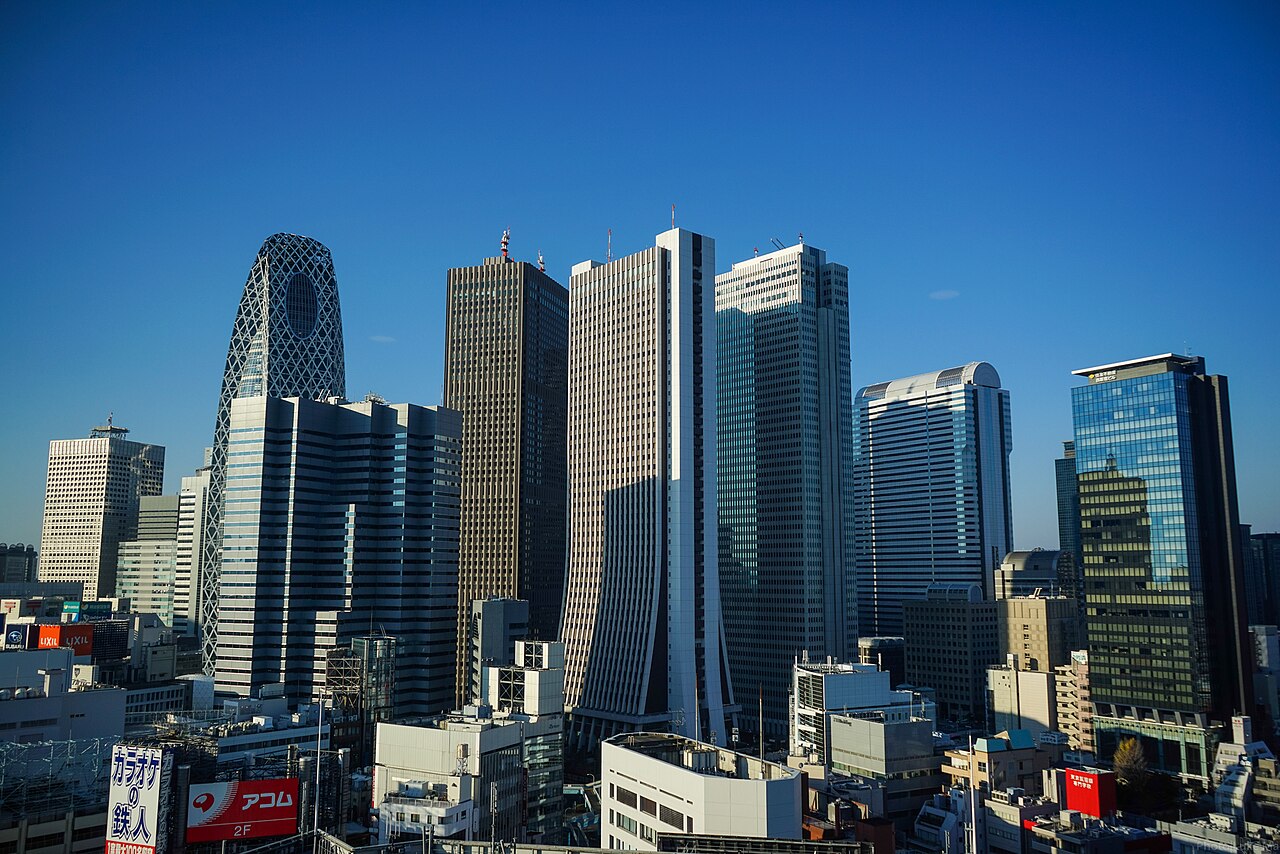
Shinjuku skyline. Tokyo's central five wards account for 42% of all foreign investment in Japanese real estate.
CBRE reports that Tokyo has ranked first globally in cross-border real estate investment for seven consecutive years. Factors attracting foreign capital include the depreciated yen creating a price discount, relatively low interest rates, minimal restrictions on foreign property purchases, and Japan's political stability within Asia.
By region, Tokyo's central five wards (Chiyoda, Chuo, Minato, Shibuya, Shinjuku) account for 42% of all foreign investment. Osaka, Niseko, Kyoto, and Fukuoka also attract varying levels of capital. Investors originate primarily from the Greater China region, with increasing participation from the United States, South Korea, and the Middle East.
Tokyo's Central Five Wards: Market Reality
What does the market look like in the areas where foreign capital concentrates? Using urbalytics property search and building cap rate stats, we can observe sale price levels in core areas.
Shibuya Station currently has 56 commercial buildings listed for sale, with an average asking price of approximately 840 million yen and an average surface cap rate of 4.01%. Over the past 12 months (September 2025 to September 2026), the average price per tsubo rose by 8.25%. Shinjuku Station has 31 listed buildings with an average price of approximately 730 million yen, up 6.38% over the same period. Tokyo Station has extremely limited building listings, with an average price of 560 million yen.
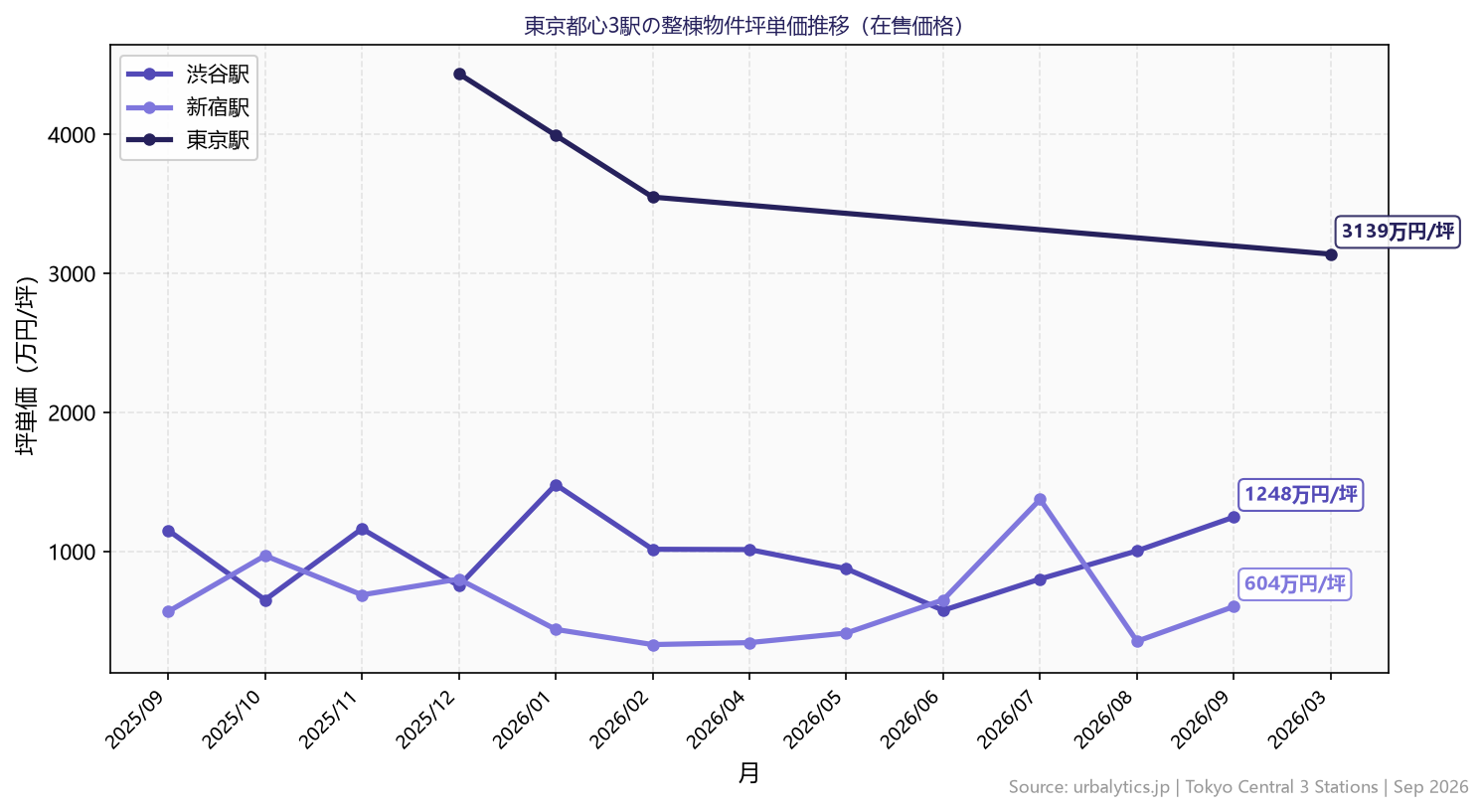
Average sale price per tsubo trend for commercial buildings near Shibuya, Shinjuku, and Tokyo stations. Data source: urbalytics building_cap_rate_stats.
For land listings, Shibuya Station has 57 parcels averaging 14.47 million yen per tsubo; Shinjuku has 17 parcels at 13.91 million yen; Tokyo has limited land parcels at 10.75 million yen. Overall, cap rates in central Tokyo are compressed to the 3% to 4% range, with foreign capital competition driving up asset prices.
urbalytics Data Insight: Shibuya's 56 buildings and 57 land parcels for sale form the largest investment-grade market in central Tokyo. The 8.25% price increase over 12 months indicates strong foreign demand, but a 4% cap rate means asset prices are already elevated. If the permit system extends to general real estate transactions, market liquidity could be affected. For now, this risk has not materialized.
Market Impact: Three Dimensions
First: Limited direct impact. The permit system targets land within 1km of SDF facilities and specific sensitive areas. Most residential and commercial properties in Tokyo's central five wards fall outside this scope. Foreign individual investors purchasing standard condominiums and commercial buildings remain unaffected under the current framework.
Second: Significant signaling effect. The regulatory direction has shifted from "knowing who buys" (nationality declaration, April 2026) to "controlling whether they can buy" (permit system proposal, September 2026). This policy trajectory may influence foreign investor expectations. Some investors may accelerate transactions before regulations tighten, potentially driving up short-term volume.
Third: Uncertainty over follow-up measures. The proposal mentions considering tax measures or time-limited restrictions to curb speculative purchases. If measures similar to Canada's temporary ban on non-resident purchases or Australia's "new-build only" policy are introduced, the impact on Tokyo's high-end condominium market would be more direct. These measures remain at the discussion stage.
What Investors Should Watch
For investors focused on Japanese real estate, it is important to distinguish between two dimensions: whether actual transactions are restricted, and whether market sentiment is affected.
On actual transactions, searching on urbalytics reveals that central Tokyo still has substantial supply. With 56 buildings and 57 land parcels in Shibuya, and 31 buildings and 17 land parcels in Shinjuku, the market remains well-supplied. Commercial properties, while cap rates are compressed to 3% to 4%, still see active transactions. Detailed property listings and price trends can be found on the Shibuya Station market page.
On market sentiment, the extraordinary Diet session's deliberation progress is worth monitoring. If the amendment passes this year, implementation in fiscal 2027 becomes more likely. Investors can use the urbalytics data platform to track listing volumes and price changes in core areas, identifying any abnormal movements driven by policy expectations.
Search Tokyo Central Properties on urbalytics
Click here to use the urbalytics search feature and explore condominiums and commercial properties for sale in Tokyo's central five wards. Filter by station, price, size, and cap rate.
Risk Disclosure: Sale price and cap rate data cited in this article represent listing benchmarks, not actual transaction prices. Surface cap rates do not deduct management fees, repair costs, or taxes. Regional averages may obscure individual property differences. Policy content is based on the proposal stage; actual legislation depends on Diet deliberation outcomes.
This article does not constitute investment advice.
#JapanRealEstate #TokyoProperty #ForeignInvestment #LandRegulation #LDP #PermitSystem #urbalytics
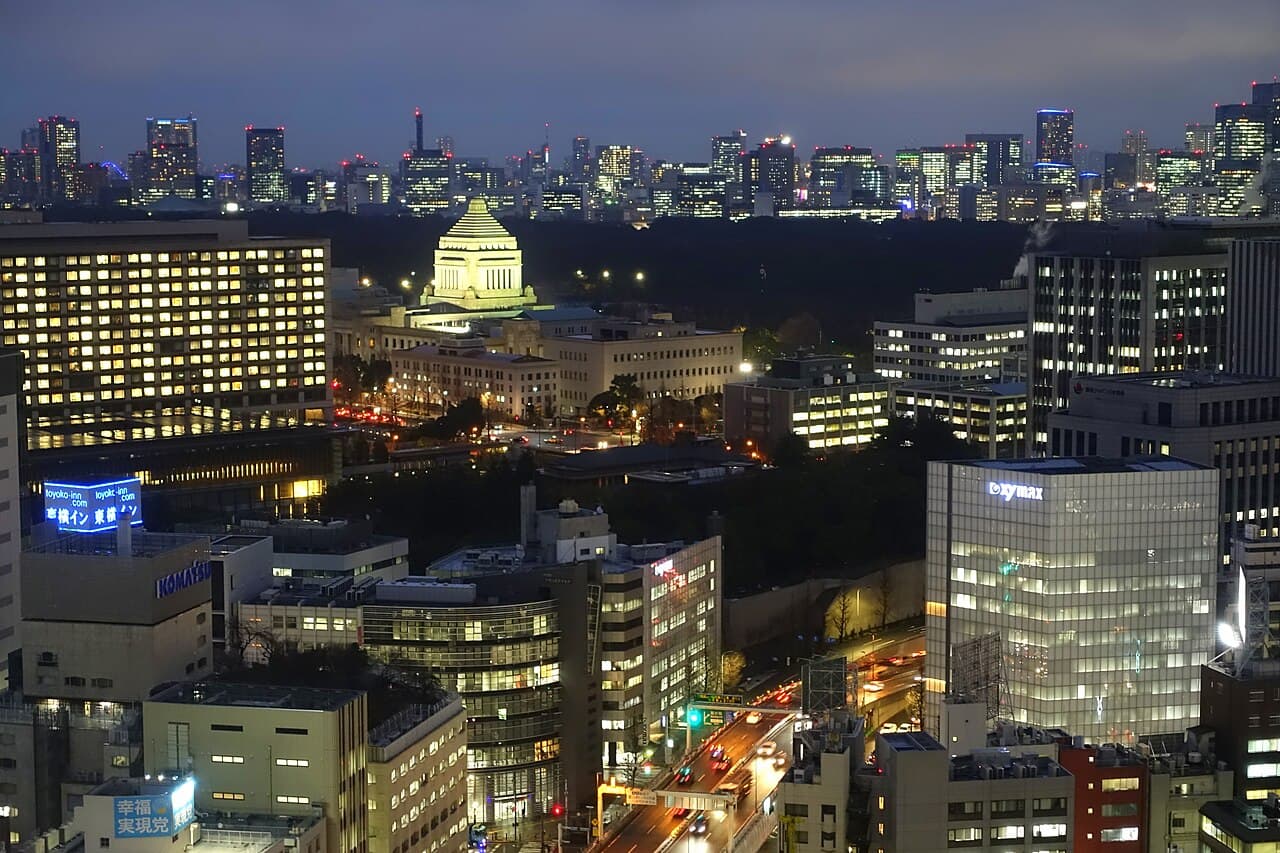
※ Charts in this article are generated from urbalytics platform data. The cover image shows the National Diet Building, and the Shinjuku skyline image is from Wikimedia Commons.
References
- JPChina Press, "LDP Proposes Permit System for Foreign Land Purchases Near Sensitive Areas," September 25, 2026
- Mitsubishi UFJ Trust Bank survey on foreign national purchase ratios for new Tokyo condominiums
- CBRE Cross-Border Real Estate Investment Survey (Tokyo ranked first for 7 consecutive years)
- urbalytics platform data (search_properties / building_cap_rate_stats, retrieved September 2026)
- Ministry of Land, Infrastructure, Transport and Tourism, "Expert Council Proposal on Land Acquisition and Use," August 2026
Copyright: This article is original content by the author. Please do not reproduce, copy, or quote without permission. For usage requests, please contact the author or this site.