Words: 1003 | Estimated Reading Time: 6 minutes | Views: 58
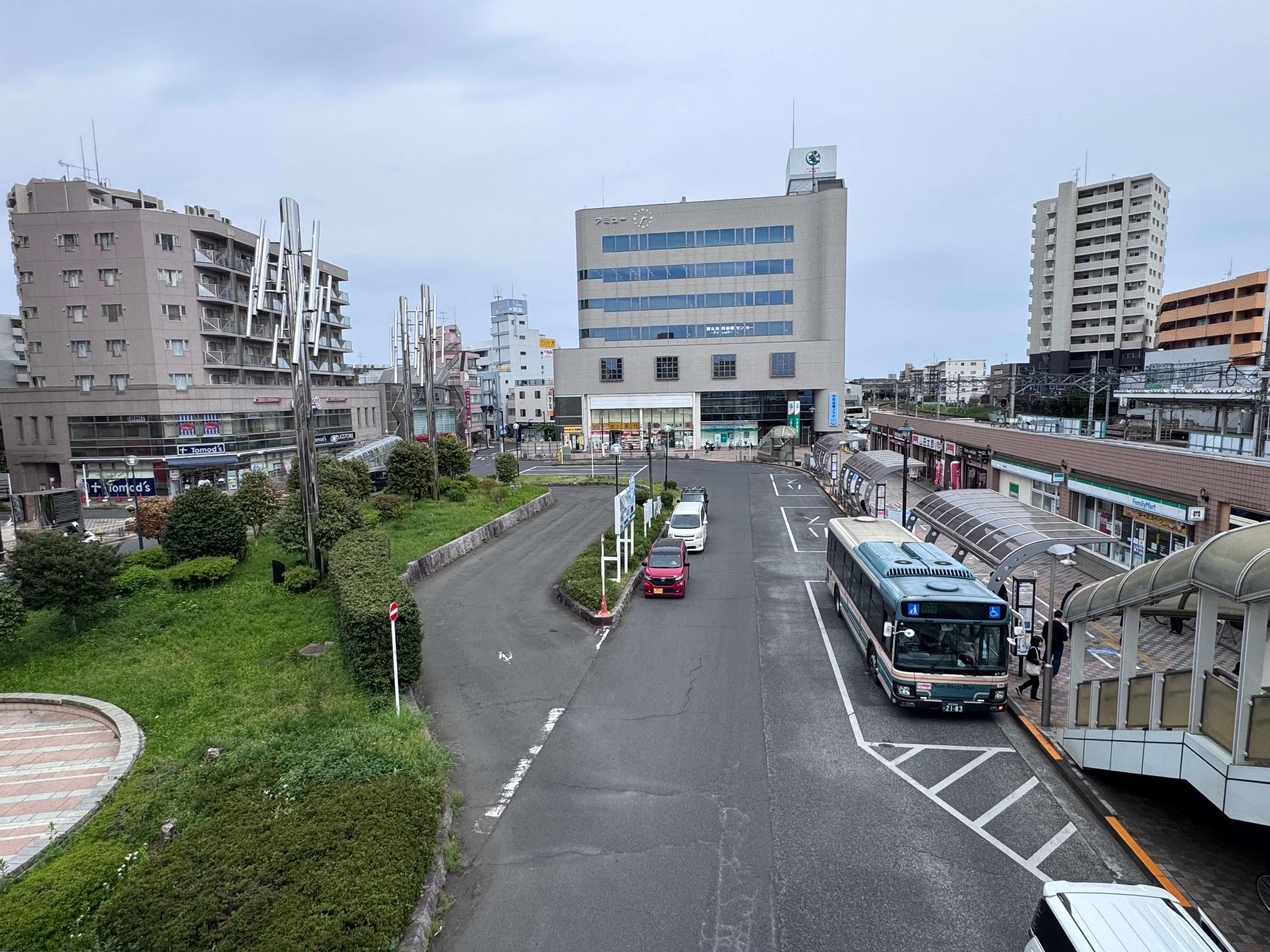
Tokyo and Saitama meet at Seibu Ikebukuro Line Kiyose Station (清瀬駅). Though less known than Nakano or Kichijoji, it quietly offers a unique historical character, stable residential values, and often-underrated investment appeal. For real estate investors targeting steady medium- to long-term returns, Kiyose (清瀬) is an area worth serious consideration.
Historical value: From tuberculosis sanatoriums to a forest-embraced, tranquil residential city
Since the late Taisho era, Kiyose developed as one of Japan’s leading tuberculosis sanatorium hubs, backed by its dry climate, abundant forest resources, and gentle topography. Large-scale sanatoriums (e.g., the National Sanatorium Tuberculosis Research Institute (国立療養所結核研究所)) drew medical professionals and patients, shaping a distinctive “city where medicine and forests coexist.” In the early Showa era, amid nationwide tuberculosis outbreaks, Kiyose was positioned as a “tuberculosis sanatorium city,” leveraging superior air quality and forest cover. Major medical facilities such as Fukujuji Hospital (複十字病院), Salvation Army Kiyose Hospital (救世軍清瀬病院), and National Hospital Organization Tokyo Hospital (国立病院機構 東京病院) were established, and this medical-core urban structure has carried through to the present.
This historical foundation has left Kiyose with abundant natural spaces and a high concentration of medical institutions. While it has evolved into a suburban residential area, traces of the original “sanatorium city” planning remain in many places. Compared with Tokyo’s highly urbanized districts, Kiyose retains a stronger sense of breathing room.
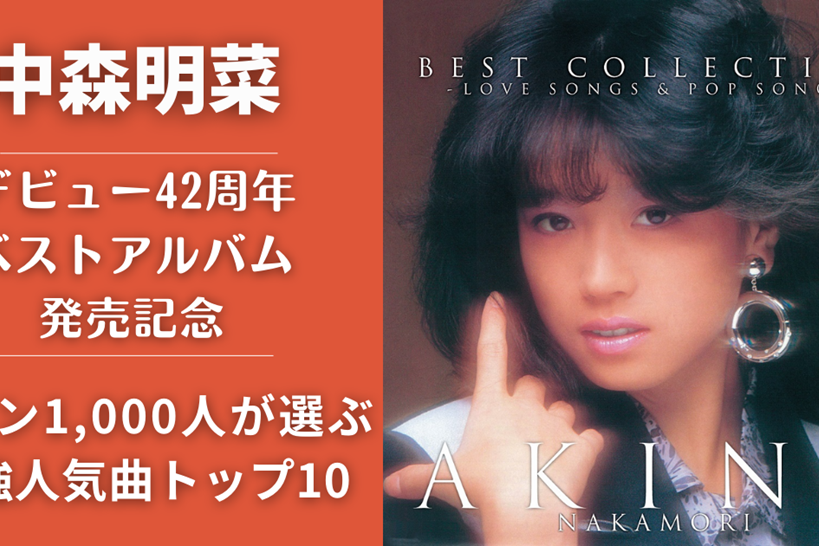
Kiyose City is also the hometown of Showa-era song icon Akina Nakamori, adding cultural memory to its mix of medicine and nature and serving as a source of local pride.
Recent trends: A steadily expanding residential area and a beneficiary of Greater Tokyo’s outward growth
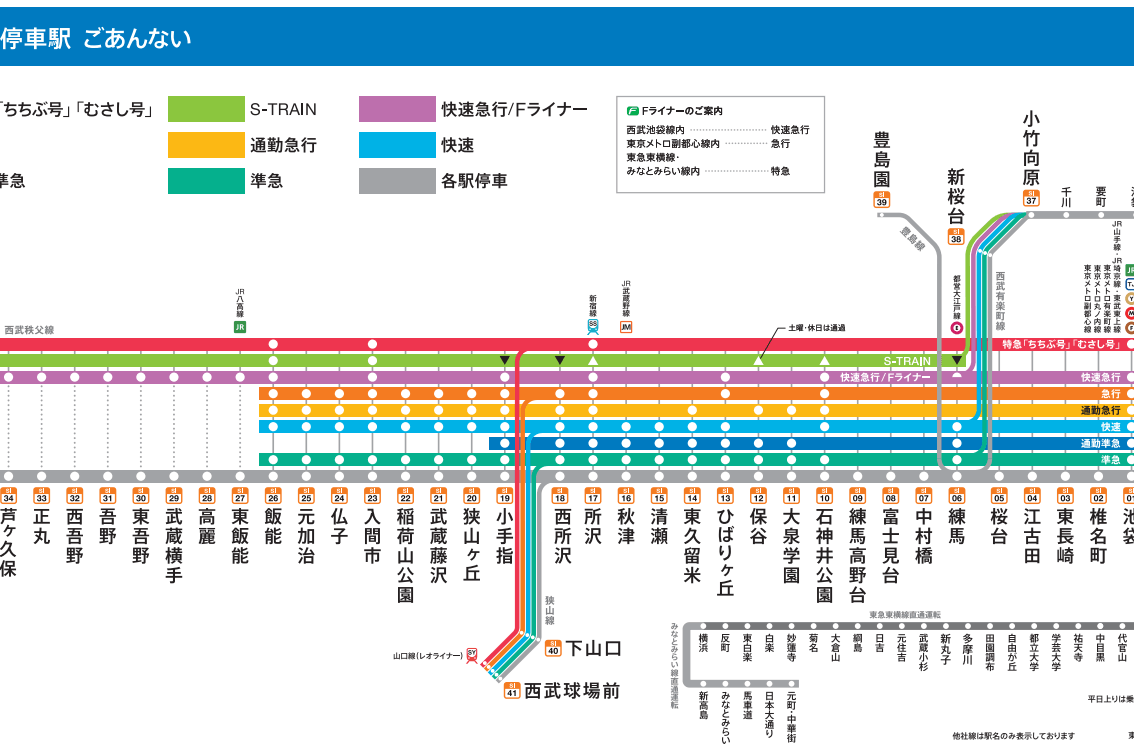
Kiyose Station is Kiyose City’s only railway station on the Seibu Ikebukuro Line, about 25 minutes from Ikebukuro. While it is not an express stop, some originating trains are scheduled at certain times, and through-services connect to the Tokyo Metro Fukutoshin and Yurakucho lines and onward to the Minatomirai Line, offering strong convenience for both commuting and weekends. In FY2023, average daily entries and exits were about 61,000, indicating stable flows for a mid-sized commuter station. In recent years, benefiting from its status as a Seibu Ikebukuro Line “Semi-Express” stop and the spillover of near-suburban residential demand, it has become a priority residential choice for families and seniors who prefer to be slightly removed from the city center without sacrificing convenience.
Surrounding facilities & development projects
Waterfront greenbelt and living environment
Kiyose has a riverfront greenbelt along the Karabori River, with well-developed promenades and birdwatching areas. Residents can jog and walk dogs in nature on a daily basis. Within the city, Kanayama Green Space and expanses of coppice woods are scattered, helping Kiyose maintain its “forest city” image.
Around the station
North Exit area redevelopment: Redevelopment of the North Exit area was completed between 1983 and 1995, delivering the mixed-use facility CREA (クレア). It houses Seiyu (西友), drugstores, chain restaurants, and the Kiyose City Library, and offers a barrier-free pedestrian deck plus bus and taxi interchange plazas—providing excellent everyday convenience.
South Exit streetscape: The South Exit retains a strong local shopping-street culture, with long-established diners, greengrocers, and variety stores lining the streets. While there are no large-scale commercial complexes, daily needs are well covered. The area hosts numerous medical and educational institutions, including the National College of Nursing and Meiji Pharmaceutical University, making it a hub for healthcare workers and students.
New Central Park project designed by Kengo Kuma
On the west side of the station, a mixed-use development led by Kengo Kuma and Associates (隈研吾建築都市設計事務所) is underway at Central Park, with phased openings planned for 2026. The project will integrate a children’s center, library, and green open spaces, and will also create an outdoor area to display the luxury train “Yume Kūkan” (夢空間), expanding activities for families and parents with children.
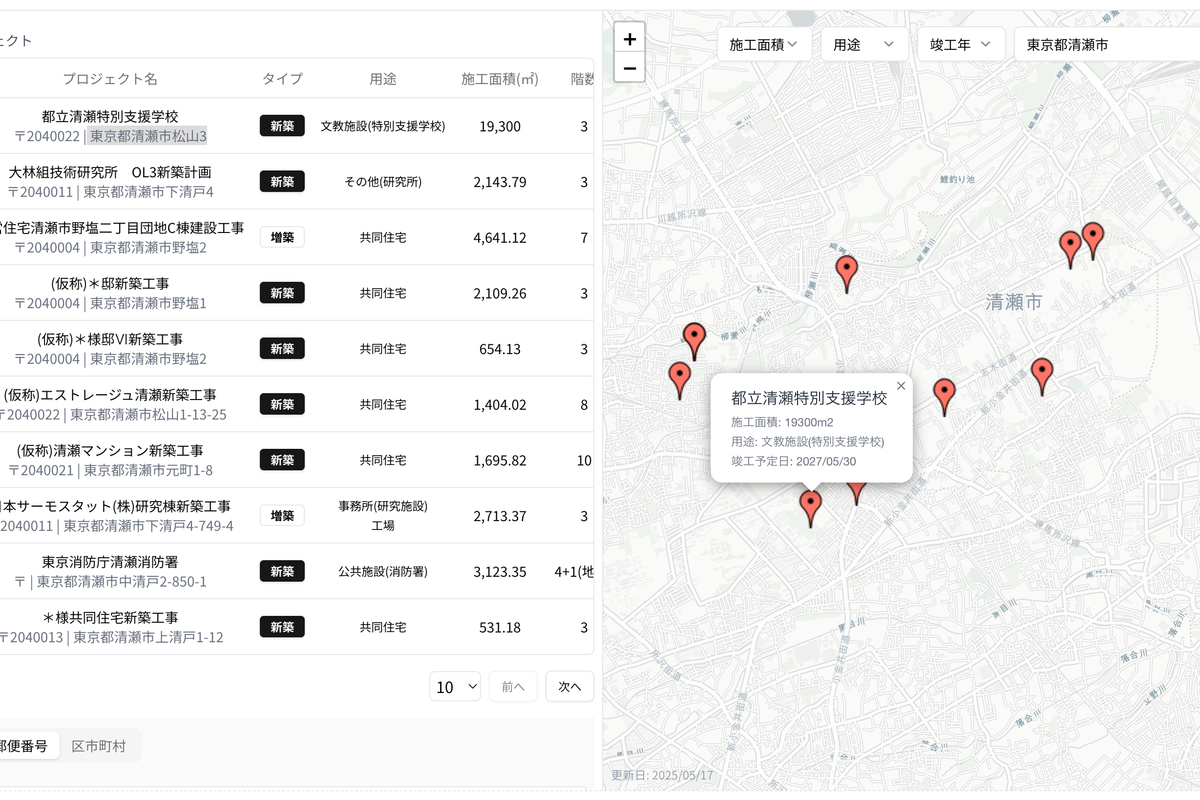
Through Urbalytics’ building-planning function, you can review recent development plans for nearby housing estates and schools.
Investment potential: An undervalued zone for stable, income-oriented assets
Because price levels are lower than at neighboring stations such as Tokorozawa or Hoya, Kiyose is gradually drawing interest from young families and small-ticket investors. From an investment standpoint, entry barriers are low and risks are relatively modest, making it suitable for those taking their first steps in Greater Tokyo real estate. With a concentration of medical and educational institutions, rental demand from healthcare workers and students is stable and resilient to cyclical downturns. At the same time, the Central Park project and improvements in the North Exit commercial area should underpin steady future gains in land values and rents, supporting medium- to long-term appreciation.
2025 Official Land Price data:
Average residential land price: ¥195,900/m² (YoY +2.5%)
Average commercial land price: ¥370,500/m² (YoY +3.0%)
Residential rents in Kiyose:
Singles (1K–1DK): about ¥60,000
Couples/two-person (1LDK–2DK): about ¥90,000
Families (2LDK–4LDK): about ¥120,000
The overall average rent is about ¥70,000, leaving a pronounced gap versus the 23 wards average of ¥150,000.
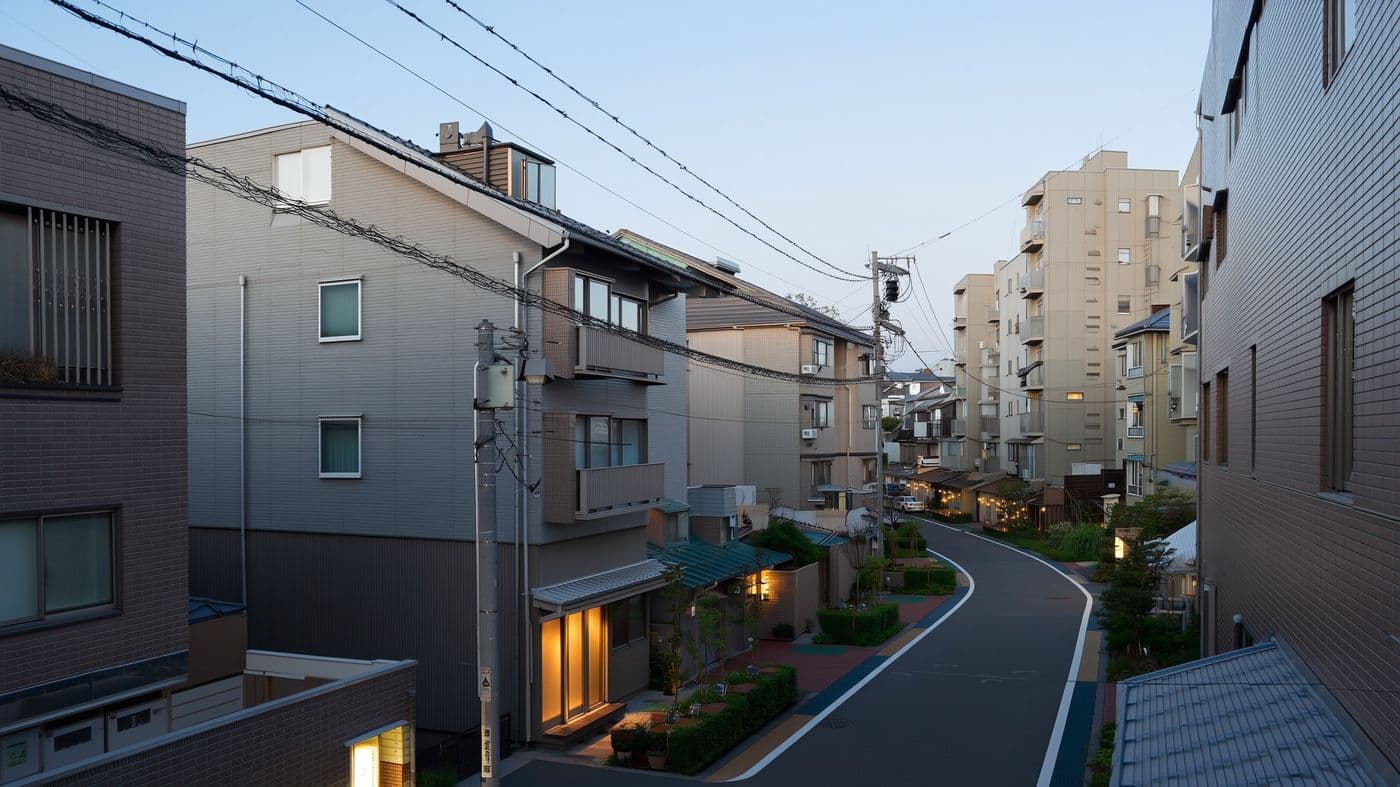
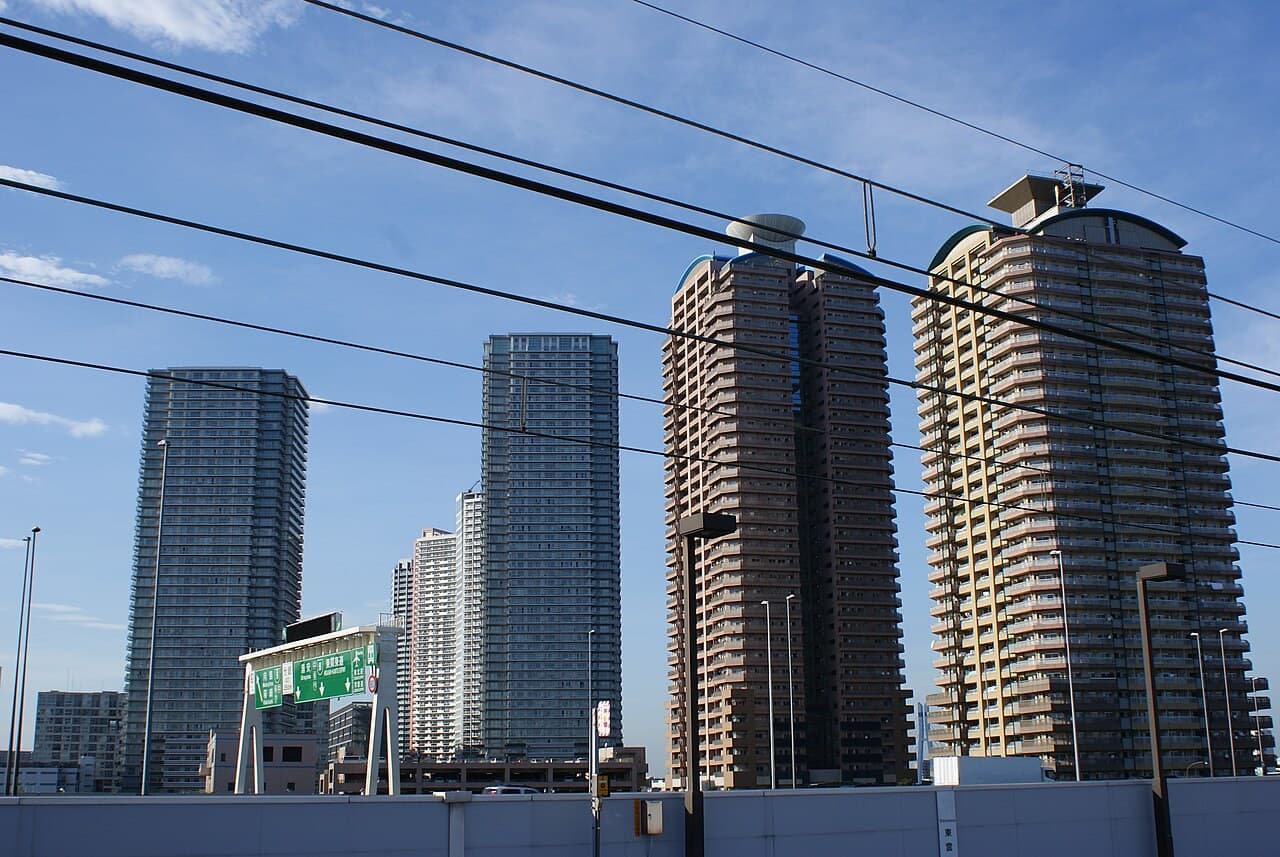
Residential mix and target cohorts: Kiyose City offers diverse housing types. High-rise condominiums cluster around the station, while a short distance away you find small- and mid-scale multifamily buildings, detached houses, and housing estates—serving varied needs across singles, families, seniors, and healthcare workers.
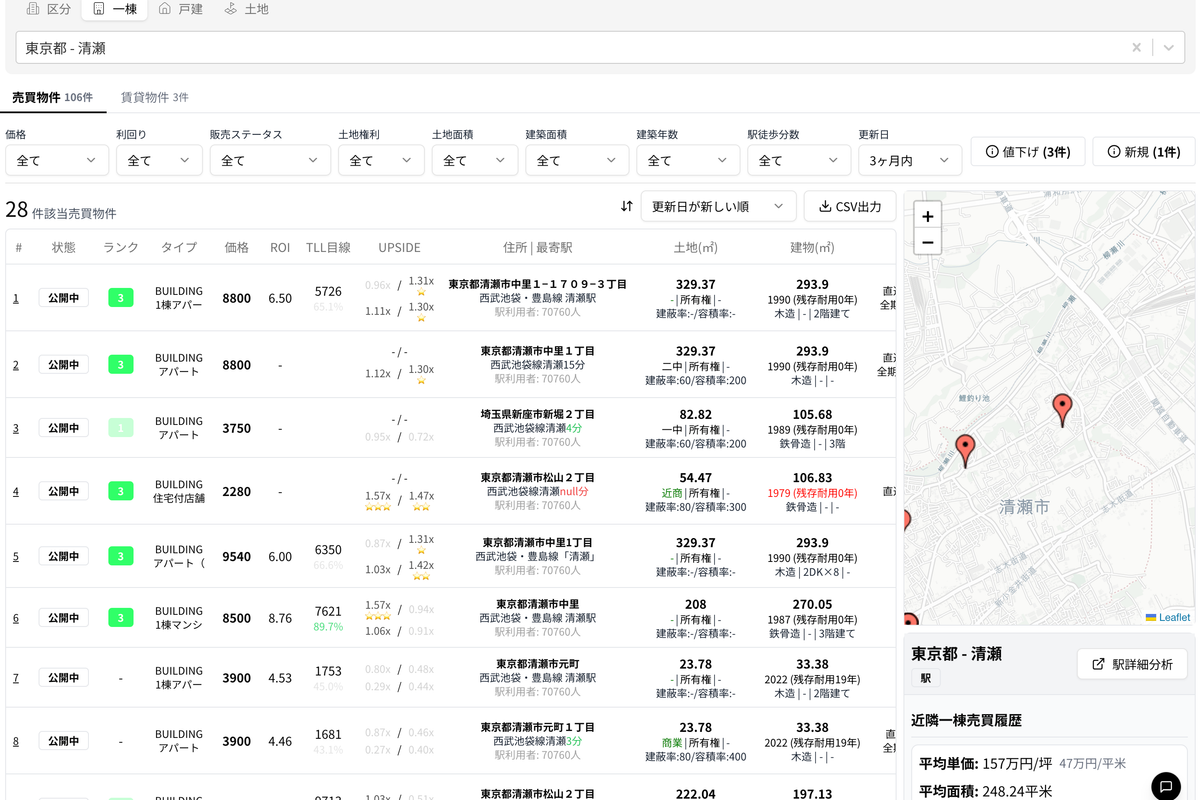
Urbalytics’ property search shows that most Kiyose assets trade below ¥100 million, with gross yields of 6.4% or higher—above the 23-ward average. Cash flows are comparatively stable.
Conclusion: An emerging option for the “rational investor”
Kiyose is neither a trend hotspot nor a social-media darling. But for investors prioritizing cash-flow safety and volatility resilience, and seeking to allocate long-term, capital-preservation assets in Greater Tokyo, Kiyose is a “quiet performer” worthy of sustained monitoring and measured exposure.
Over the next three years, as the Central Park project comes online and local age demographics evolve, dual demand is likely to grow for both high-quality family housing and high-function studios/1BR rentals. If you are looking in Greater Tokyo’s suburbs for an area with remaining upside, solid cash flows, and high everyday convenience, Kiyose is an undervalued candidate. It is not a venue for short-term trading, but a prudent choice for long-term investors.
Copyright: This article is original content by the author. Please do not reproduce, copy, or quote without permission. For usage requests, please contact the author or this site.